ISSF Shooting Events Explained: Rifle, Pistol and Shotgun
by Juily23 Oct 2026No likes yet
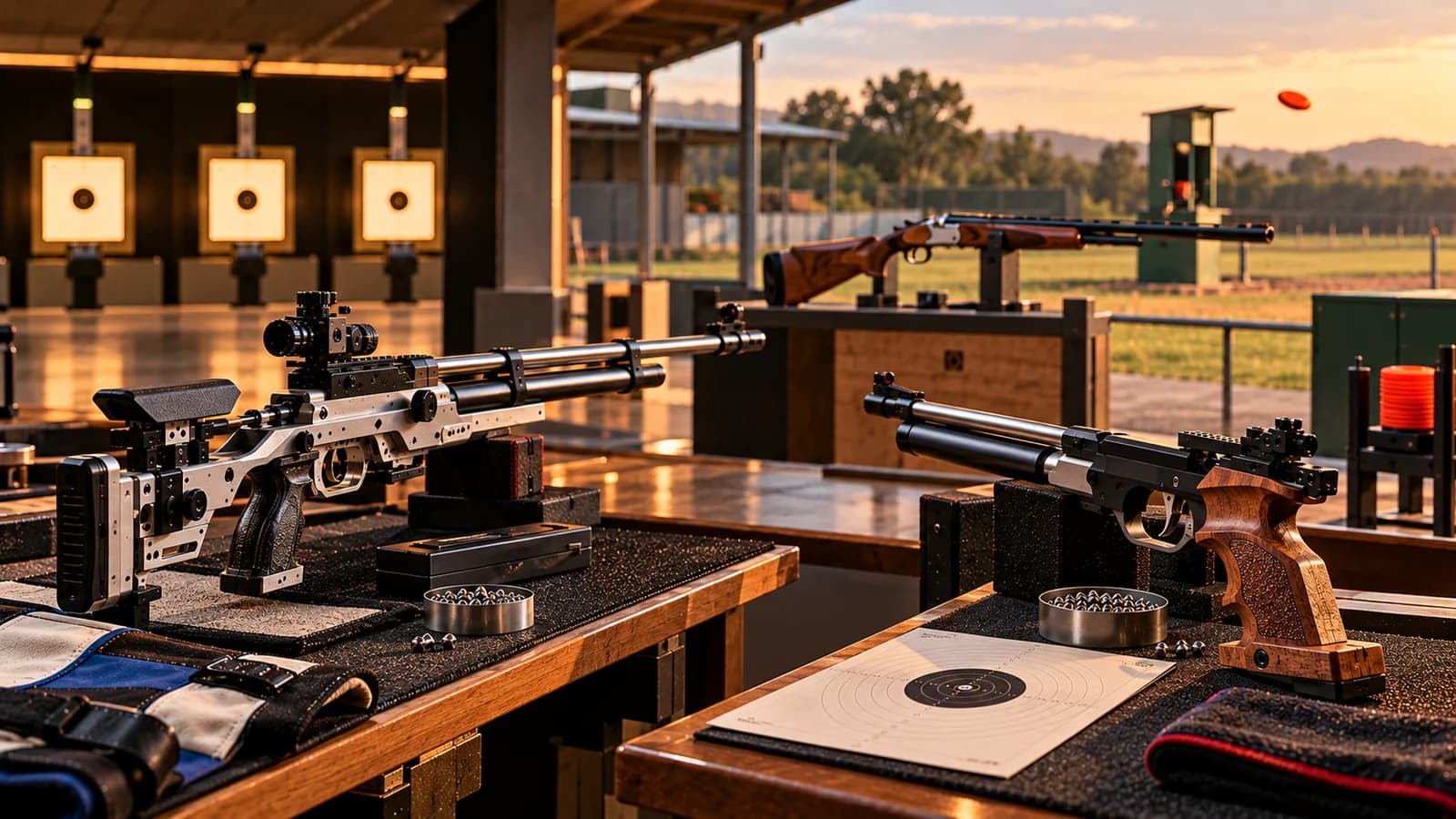
Rifle, pistol, shotgun, 10m, 25m, 50m, trap, skeet. If you are new to shooting sport, the list of events can be confusing. This guide explains each ISSF discipline in plain words: what you shoot, from how far, and how the event works.
ISSF stands for the International Shooting Sport Federation, which writes the rules for international shooting, including the Olympic Games. National competitions in India in these events follow the ISSF rules along with the NRAI Match Book.
The three disciplines
ISSF shooting is split into three groups:
- Rifle: shot at paper or electronic targets, at 10m (air rifle) or 50m (small-bore .22 rifle)
- Pistol: shot at targets at 10m (air pistol), 25m or 50m
- Shotgun: shot at flying clay targets outdoors, in trap and skeet
Rifle events
10m Air Rifle
- 4.5 mm air rifle, standing position, no support
- Qualification: 60 shots, scored in decimals (up to 10.9 per shot)
- An Olympic event for men and women, plus a mixed team event
This is where most rifle shooters start. Read our 10m Air Rifle beginners guide.
50m Rifle 3 Positions
- .22 calibre small-bore rifle at 50 metres
- Shot in three positions: kneeling, prone (lying down) and standing
- Qualification: 20 shots in each position (60 in total) for men and women
- An Olympic event
It tests everything: three different positions, wind at 50 metres, and a long match.
50m Rifle Prone
- .22 rifle at 50 metres, lying down
- 60 shots
- An ISSF event, but not on the Olympic programme
Pistol events
10m Air Pistol
- 4.5 mm air pistol, one hand, standing
- Qualification: 60 shots, scored in whole numbers
- An Olympic event for men and women, plus a mixed team event
Our 10m Air Pistol beginners guide covers stance, grip and the trigger.
25m Rapid Fire Pistol (men)
- .22 calibre pistol, five targets at 25 metres
- 60 shots in two stages of 30
- Each stage has series of five shots, one at each target, fired within 8, 6 and then 4 seconds
- An Olympic event
It is one of the fastest events in shooting. Smooth arm movement between targets matters as much as accuracy.
25m Pistol (women)
- .22 calibre pistol at 25 metres
- 60 shots in two parts: a precision stage (series of five shots with five minutes per series) and a rapid stage, where the target turns to face you for 3 seconds and then turns away for 7 seconds, one shot each time it appears
- An Olympic event for women. In India it is often called 25m Sports Pistol.
Other 25m events
- 25m Standard Pistol: series of five shots in 150, 20 and 10 seconds
- 25m Centre Fire Pistol: like the 25m pistol course of fire, but with a larger calibre These are ISSF events that are not on the Olympic programme.
50m Pistol
- .22 calibre pistol at 50 metres, very light trigger allowed
- 60 shots
- An ISSF event, not on the Olympic programme. It is also called Free Pistol.
Shotgun events
Shotgun events are shot outdoors at clay targets thrown by machines. Each target is hit or missed: there are no rings.
Trap
- Targets are thrown away from the shooter from machines hidden in a trench in front of the shooting stations
- Shooters move through five stations
- Qualification: 125 targets for men and women, in rounds of 25
- Two shots may be fired at each target in qualification
- An Olympic event
Skeet
- Targets are thrown from two houses, a high house on one side and a low house on the other, crossing in front of the shooter
- Shooters move around eight stations in a half circle
- Qualification: 125 targets, in rounds of 25, with one shot per target
- The gun must be held low until the target appears
- An Olympic event
Mixed team events (one man and one woman from the same team) are also part of international shotgun competition. Which mixed events are on the Olympic programme can change between Games, so check the ISSF programme for the current list.
How finals work
In most ISSF events the best eight shooters from qualification go into a final, where scores start again from zero and shooters are eliminated one by one until the medals are decided.
The ISSF rulebook that came into force on 1 January 2026 made all individual finals eight athletes, so 25m Rapid Fire Pistol, Trap and Skeet now also have eight finalists instead of six. New final formats were introduced for several events, and the mixed team finals for 10m Air Rifle, 10m Air Pistol and Trap became a single competition for the four qualified teams. Final formats can be adjusted from time to time, so check the current ISSF rulebook on issf-sports.org for the exact procedure.
National Rules (NR) events
In India you will also see NR (National Rules) events in NRAI competitions. These follow national rules set out in the NRAI Match Book and can differ from the ISSF events in format. If you see "NR" in a circular, read the event details in that circular.
Which event should a beginner choose?
Most beginners start with 10m Air Rifle or 10m Air Pistol, because the ranges are indoors, the equipment is easier to get, and the basics carry over to other events. Shotgun usually needs access to an outdoor range and licensed equipment, so it often comes later or through a club that has a shotgun range.
Try what your nearest club offers and stick with the one you enjoy. You can find clubs on the ranges page.
Frequently asked questions
How many shooting events are there at the Olympics? The Olympic programme has 15 shooting events across rifle, pistol and shotgun, including mixed team events. ISSF publishes the confirmed programme for each Games.
What is the difference between trap and skeet? In trap, targets fly away from you at varying angles. In skeet, targets cross in front of you from two fixed houses, sometimes as pairs.
Do men and women shoot the same course of fire? In most events, yes, since the 2018 rule changes. The main exceptions are 25m Rapid Fire Pistol (men) and 25m Pistol (women).
Like, save and write your own blogs in the app.


